Meshing for Parametric Shape Optimization
GridPro's
automation capabilities also extend to shape optimization. The
dynamic boundary conforming technology in GridPro allows the
generation of meshes for a wide range of geometric variants using a
single topology. This technology accommodates variations in component
shape or position by automatically moving the grid blocks over the
surface. As a result, the grid blocks align with the new geometry,
producing smooth and orthogonal grids.
Although a single topology is generally suitable for all geometric variants in shape optimization, extreme variants may require adjustments to certain blocks to accommodate significant deviations from the mean geometry. In such cases, appropriate transformation commands can be invoked within the script, enabling larger transformations of blocks to align with the new geometric features.
To facilitate hands-free shape optimization CFD studies, GridPro can be effectively combined with parametric geometric modeling software like Caeses. The process involves feeding different parametric variants generated by Caeses into the GridPro script to generate multi-block grids. Subsequently, a CFD solver, integrated into the automation chain, performs the CFD computations for each design variant considered in the design space.
To sum-up, by harnessing the power of GridPro's Python-based APIs, users can unlock the full potential of automation in grid generation and streamline their design processes, ultimately accelerating their CFD studies.
Example Case 1: Integrating GridPro with CAD software, Catia.
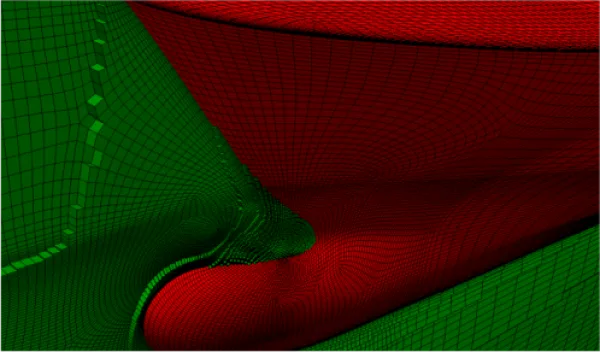
The integration of GridPro and Catia using Python APIs allows for seamless collaboration. This integration enables the simultaneous creation of blocks within CATIA while generating the geometry for the volute. Subsequently, GridPro's grid generator can retrieve the geometry and blocks to generate a multi-block grid specifically tailored for the volute.
Example Case 2: Integration of GridPro with optimization software Caeses.
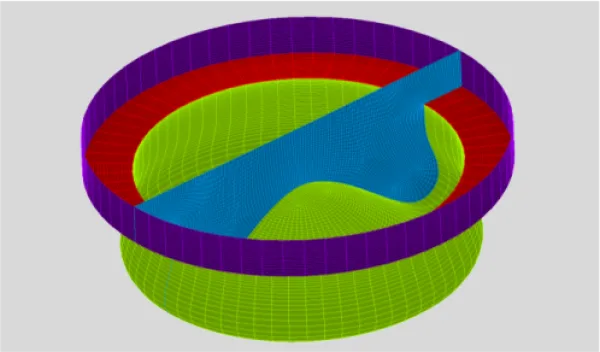
The integration of GridPro with Caeses enables smooth and automatic grid generation. The process involves creating models that take into account different design variables. Each design variant is exported in STL format to be read by GridPro script for grid-generation. The script written for a mean design, generates grids automatically for all the geometric variants churned out by the optimisation algorithm. In this Example Case, grids for different geometric variants for a piston bowl was generated in Caeses environment.

Example Case 3: Tandem sphere: API for surface and topology transformation
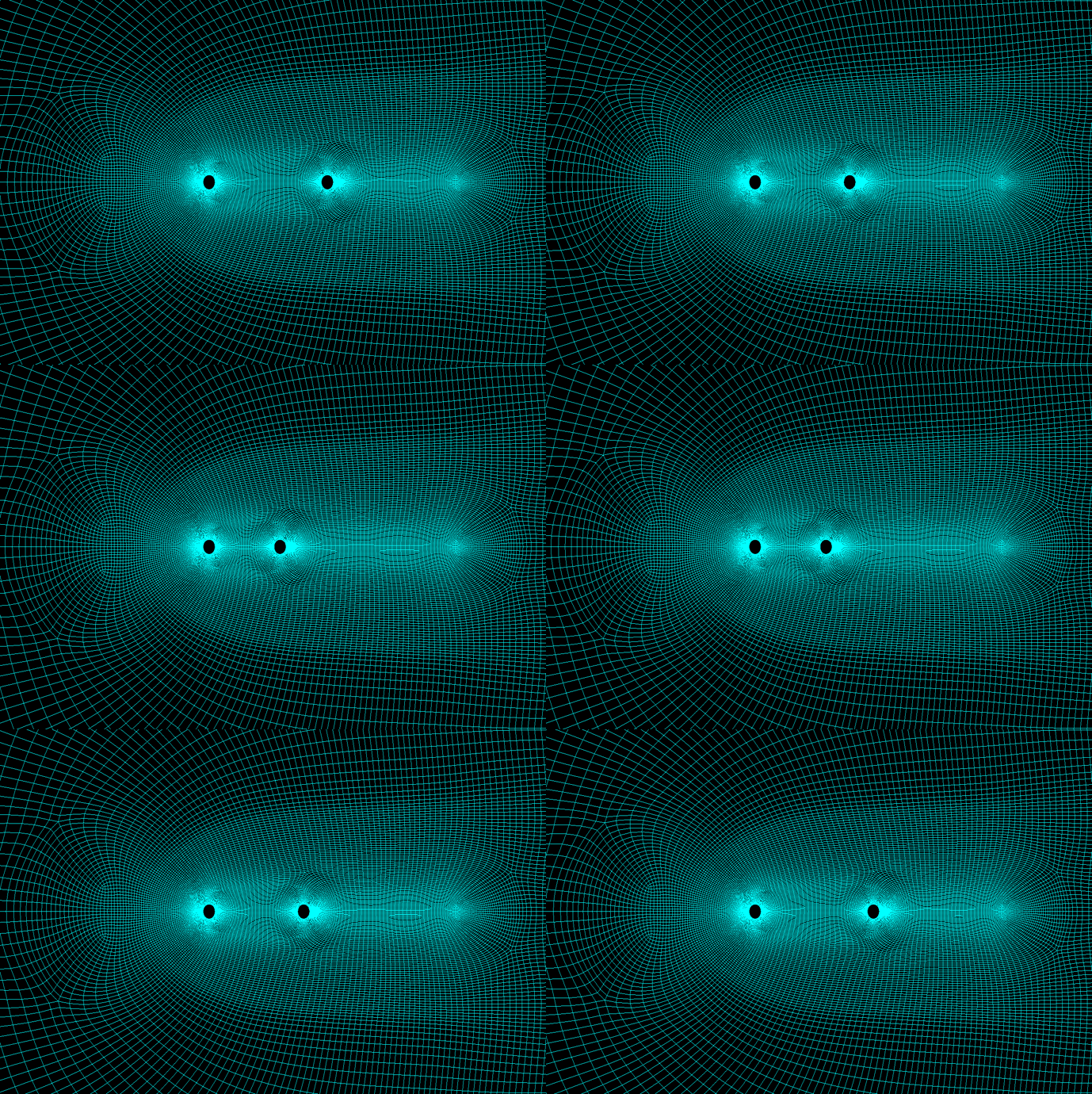
The issue involves the process of creating meshes for individual instances, specifically when two spheres are in motion, moving closer to or farther away from each other. To address this, multiple grids were generated by utilizing APIs to transform the surfaces and their respective topologies.
For more detail, check this API tutorial: Tandem Spheres.pdf
Example Case 4: API scripting for meshing multiple geometries.
API
scripting is utilized to create a self-similar mesh for multiple
geometric variants of a reentry capsule. This process assumes that
the user has access to all the necessary geometric files, which are
organized in different folders. The API script systematically selects
each geometry, performs meshing operations, and then saves the
resulting grids in their corresponding folders.
For
more detail, go through this API tutorial:
Variable
geometry automation of reentry capsule.pdf
Read more on Shape Optimization