The Role of Structured Grid Generation in Computational Physics Simulations
INTRODUCTION
Advances in computational science have significantly expanded the ability of researchers to investigate complex physical phenomena that cannot be explored through analytical methods alone. Numerical simulations now play a central role in fields ranging from aerospace engineering to theoretical physics. Many of these simulations involve solving highly nonlinear systems of partial differential equations on computational grids that represent the geometry or domain of interest.
The research paper “The Physics of Interstellar – Mission Impossible” discusses several aspects of advanced space propulsion concepts and theoretical physics models related to spacetime topology and quantum gravity. In the course of explaining these ideas, the study highlights the importance of computer simulations and numerical modeling in understanding physical systems that cannot be solved analytically. Computational grids generated using the GridPro software are used to illustrate several examples in the paper, including representations of wormhole geometries, spacetime lattice structures, and spacecraft configurations used in aerospace simulations.
These examples demonstrate how structured grid generation tools can support computational studies across both engineering and theoretical physics applications.
CHALLENGES
One of the primary challenges in numerical simulation is the representation of complex geometries and physical domains in a form suitable for computational analysis. Many physical systems involve intricate spatial structures that must be discretized into computational meshes before numerical methods can be applied.
In the context of the research discussed in the paper, simulations may involve geometrical constructs such as wormhole structures or evolving spacetime lattices. Even though some of these structures are conceptual, they still require spatial discretization in order to be visualized or investigated numerically. Constructing grids for such geometries requires careful control over mesh topology and connectivity.
Another challenge arises from the need to solve nonlinear equations governing physical processes. For example, compressible fluid flow around spacecraft during atmospheric re-entry is governed by the Navier–Stokes equations. These equations can produce complex phenomena such as shocks and strong gradients, which require well-structured computational grids to capture accurately.
In addition, simulations that aim to explore theoretical models of spacetime evolution must represent large numerical domains while maintaining sufficient resolution to observe the behavior of the system. Generating meshes that balance resolution, numerical stability, and computational efficiency therefore becomes an important aspect of simulation design.
SOLUTIONS
Structured multiblock mesh generation provides one approach for addressing these challenges. In this method, the computational domain is divided into multiple structured blocks, each containing grid points arranged in a regular pattern. By carefully designing the block topology, it is possible to represent complex geometries while maintaining desirable numerical properties such as grid smoothness and connectivity.
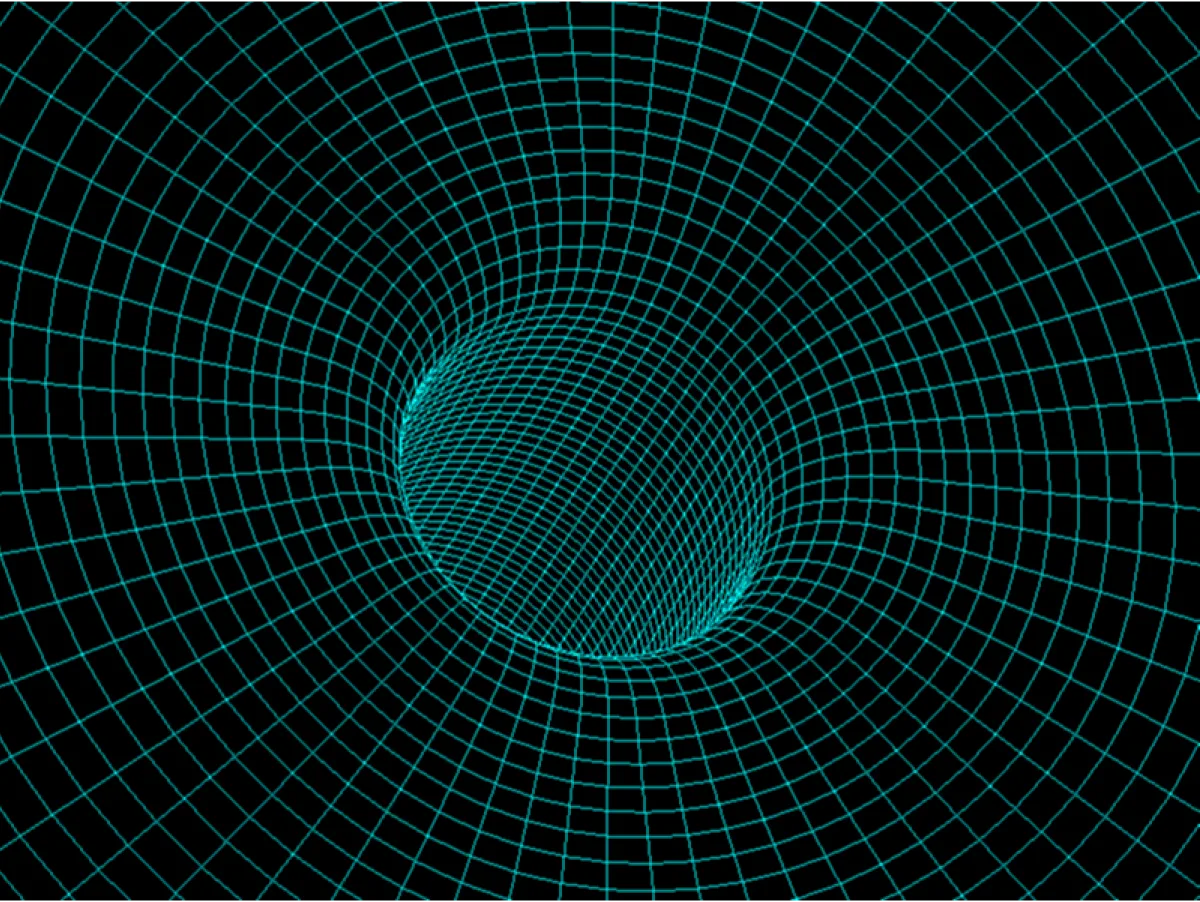
In the paper, GridPro is used to generate structured grids that illustrate several physical concepts. One example is a grid representing the entrance of a wormhole, which serves as a conceptual depiction of a spacetime shortcut between distant regions. Although the existence of such structures is debated in theoretical physics, the grid demonstrates how computational meshes can be used to visualize complex spatial configurations.
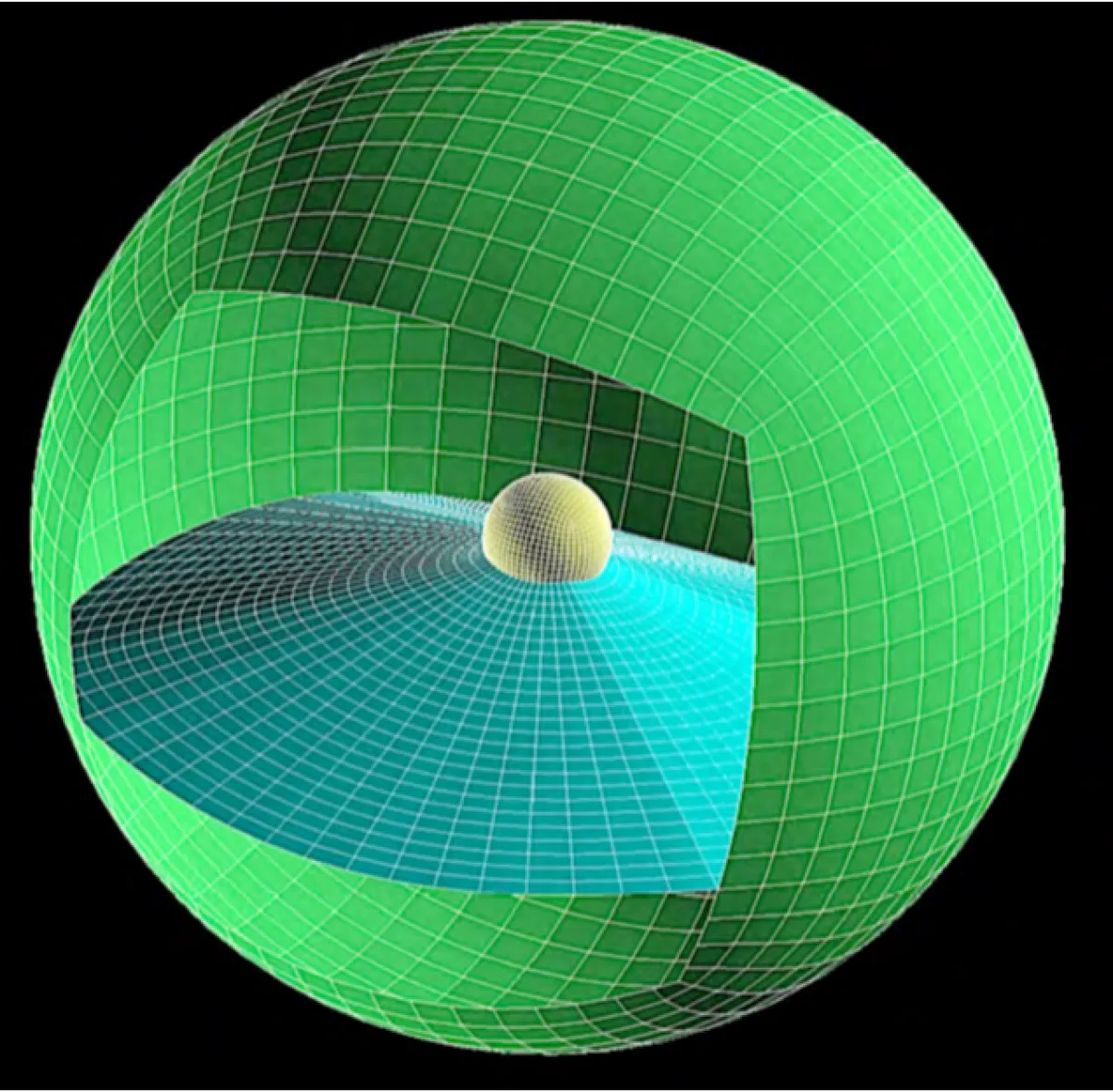
Another example presented in the paper shows a sequence of expanding spacetime lattices used to illustrate ideas related to causal dynamical triangulation (CDT), a numerical approach used in quantum gravity studies. In such models, spacetime itself is represented by a discretized lattice structure that evolves during simulation. Computational meshes provide the framework on which these simulations operate.
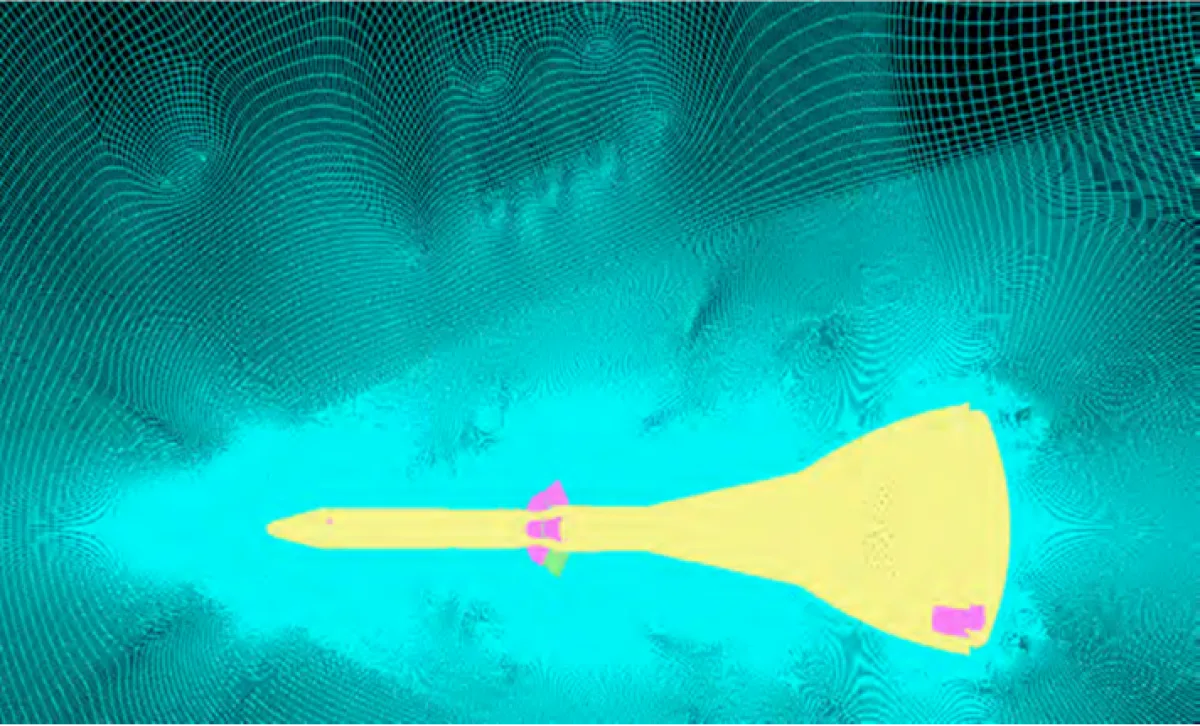
The paper also includes a computational grid for the Orion spacecraft used in atmospheric re-entry simulations. Re-entry conditions involve extremely high temperatures and complex compressible flows. Numerical simulations using detailed computational grids allow researchers to estimate heat flux and other aerodynamic quantities that are difficult to determine experimentally or analytically.
RESULTS
The use of structured grids enables numerical simulations to capture physical behavior that would otherwise remain inaccessible. In aerospace applications, simulations of spacecraft re-entry provide insight into heat transfer, aerodynamic forces, and shock structures surrounding the vehicle. These simulations are essential for the design and safety assessment of spacecraft.
In theoretical physics applications, computational grids enable researchers to explore models of spacetime structure and evolution. Numerical approaches such as causal dynamical triangulation rely on discretized representations of spacetime in order to perform large-scale simulations that investigate the properties of the universe at extremely small scales.
The examples presented in the research illustrate how computational grid generation forms a foundational step in enabling such simulations.
CONCLUSION
The study highlights the growing importance of numerical simulation in both engineering and theoretical physics. Many complex physical systems cannot be analyzed purely through analytical methods and instead require computational approaches that solve governing equations on discretized spatial domains.
Structured grid generation tools such as GridPro provide the framework needed to construct these computational domains. By enabling the creation of structured meshes for complex geometries, these tools support simulations ranging from spacecraft aerodynamics to conceptual models of spacetime.
As computational methods continue to expand across scientific disciplines, the role of high-quality grid generation remains a fundamental component of accurate and reliable simulation.