Dynamic Instability Analysis of a Double-Blade Centrifugal Pump Using Hexahedral Meshes
Unsteady flow, pressure pulsations, and vibration often limit the performance of double-blade centrifugal pumps. This case study shows how GridPro’s structured meshing enables accurate CFD analysis of rotor–stator interaction, flow instability, and blade loads, delivering reliable, grid independent results validated against experimental data.
INTRODUCTION
Double-blade centrifugal pumps are widely used in wastewater treatment, chemical processing, and slurry transport due to their ability to handle large solids and fibrous materials. However, the reduced number of blades and enlarged flow passages significantly increase flow asymmetry, pressure pulsations, and vibration levels. These unsteady flow phenomena directly affect hydraulic performance, noise generation, and pump service life.
To better understand and quantify these effects, a detailed numerical and experimental investigation was carried out on a double-blade centrifugal pump. GridPro was used to generate high-quality structured meshes for unsteady CFD simulations, enabling accurate prediction of pressure pulsations, blade loads, and flow-induced vibration across a wide operating range.
Challenges
The dynamic instability analysis of a double-blade centrifugal pump presents several critical challenges:
- Severe rotor–stator interaction between the impeller blades and the volute tongue, leading to strong pressure pulsations at the blade passing frequency (BPF).
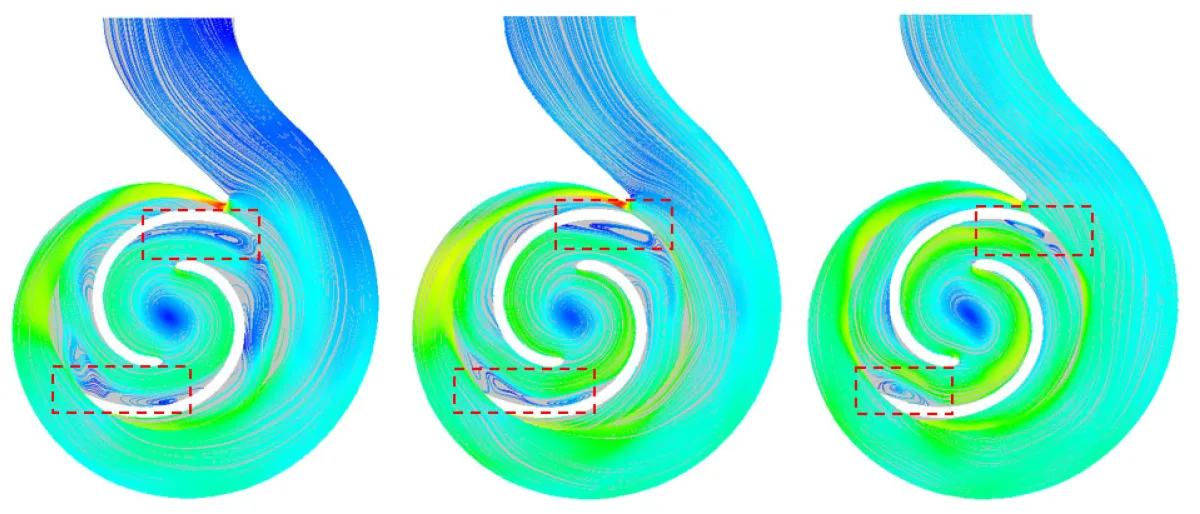
- Large-scale flow separation and vortex formation at part-load conditions, particularly near the blade trailing edge and volute tongue.
- High sensitivity of unsteady CFD results to mesh quality, especially for frequency-domain analysis and grid convergence studies.
- Requirement for computational efficiency, as transient simulations must be performed over multiple operating points and rotor revolutions.
- Accurately capturing these phenomena demands a mesh that is both topology-consistent and capable of resolving unsteady flow structures without numerical diffusion.
Solutions
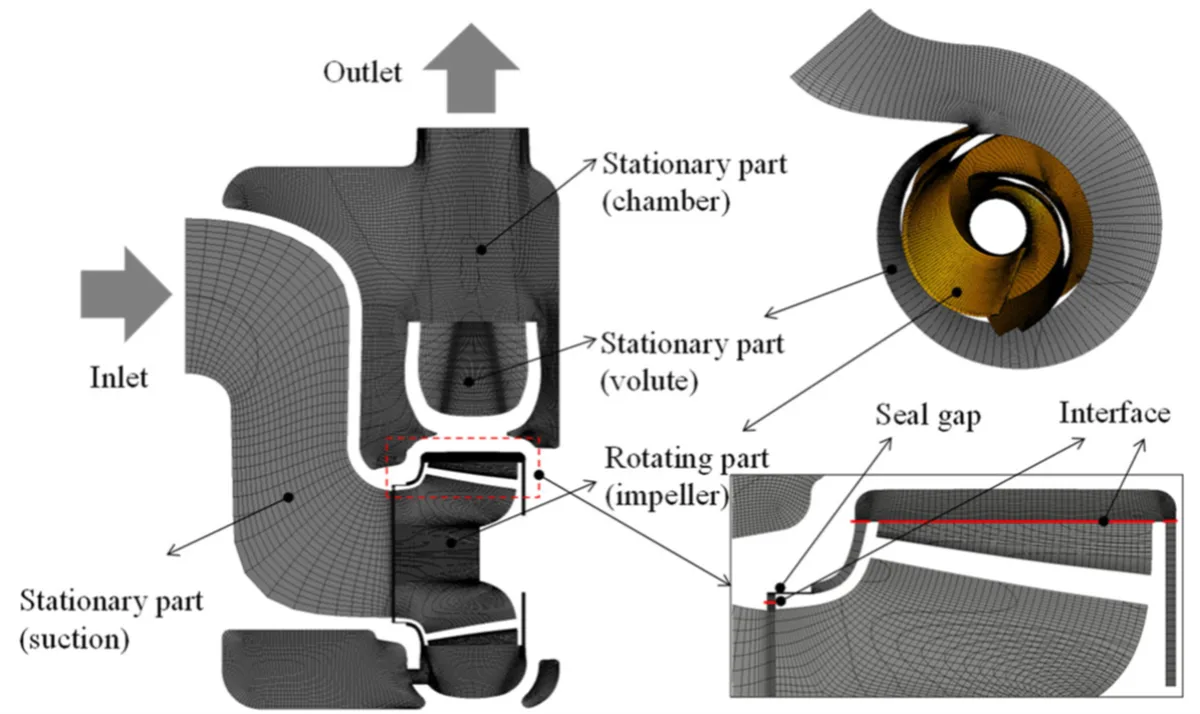
To address these challenges, multi-block structured meshing was employed for the complete pump flow domain, including the impeller, volute, suction channel, and auxiliary chambers.
Key aspects of the GridPro-based solution included:
- Topology-driven structured meshes aligned with blade surfaces, volute geometry, and flow direction, ensuring excellent cell quality and numerical stability.
- Consistent mesh interfaces between rotating and stationary components, which are essential for transient rotor–stator simulations and accurate pressure wave propagation.
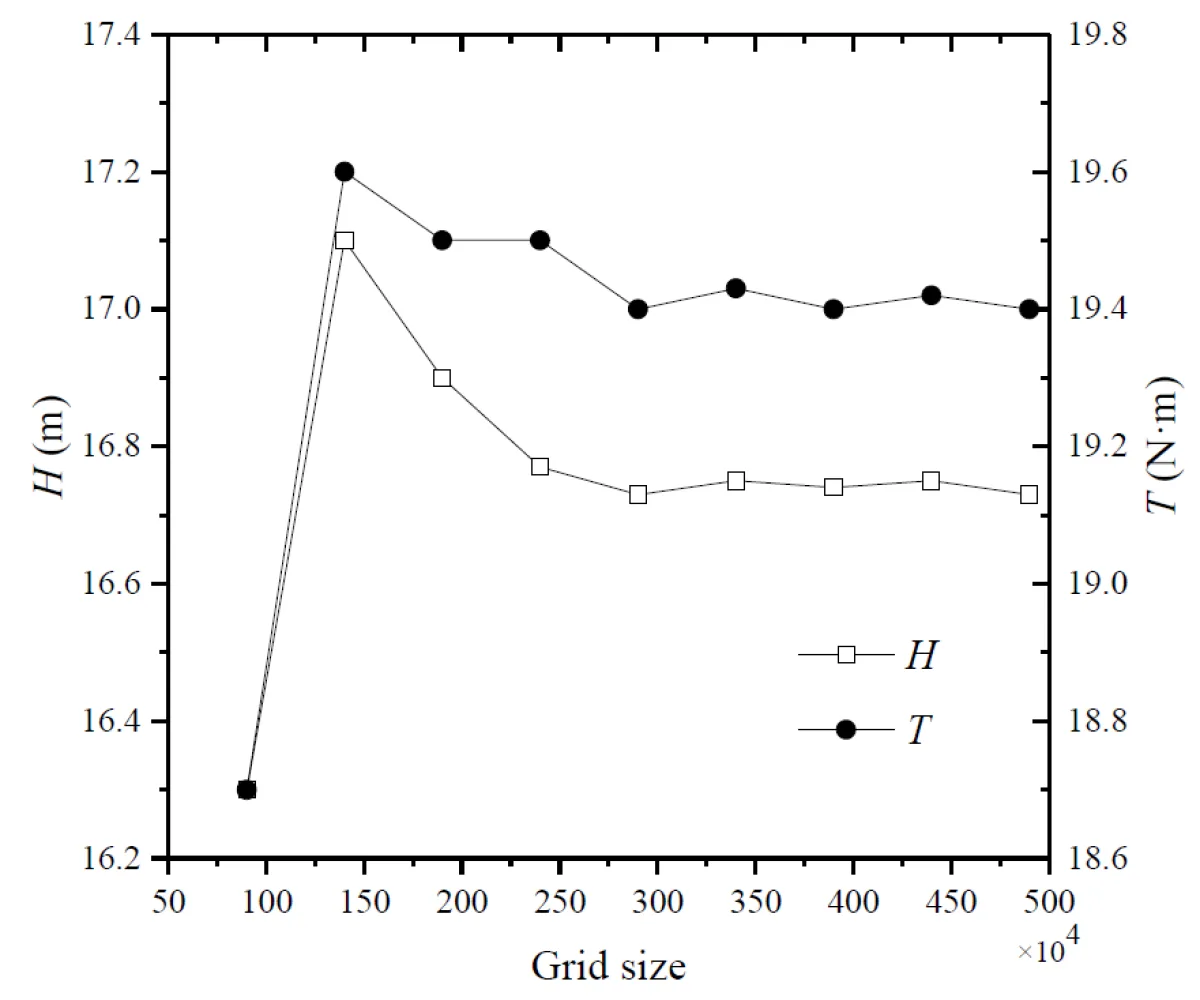
- Efficient grid refinement strategy, enabling grid-independent results with approximately 4.4 million cells—balancing accuracy and computational cost.
- High near-wall resolution, supporting the SST k-ω turbulence model in capturing separation, shear layers, and unsteady vortical structures under off-design conditions.
This meshing approach provided a robust foundation for reliable unsteady CFD analysis.
Results
The structured multiblock mesh-based CFD simulations delivered several key insights:
- Pressure pulsations were dominated by blade passing frequency and its harmonics, confirming that vibration is primarily flow-induced rather than mechanical.
- Maximum pressure pulsation amplitudes occurred near the volute tongue, where rotor–stator interaction is strongest.
- Large vortices and backflow were observed at low flow rates, leading to broadband pressure fluctuations and increased vibration levels.
- Blade radial forces were highest at part-load conditions and minimized near the design point, directly correlating with flow instability intensity.
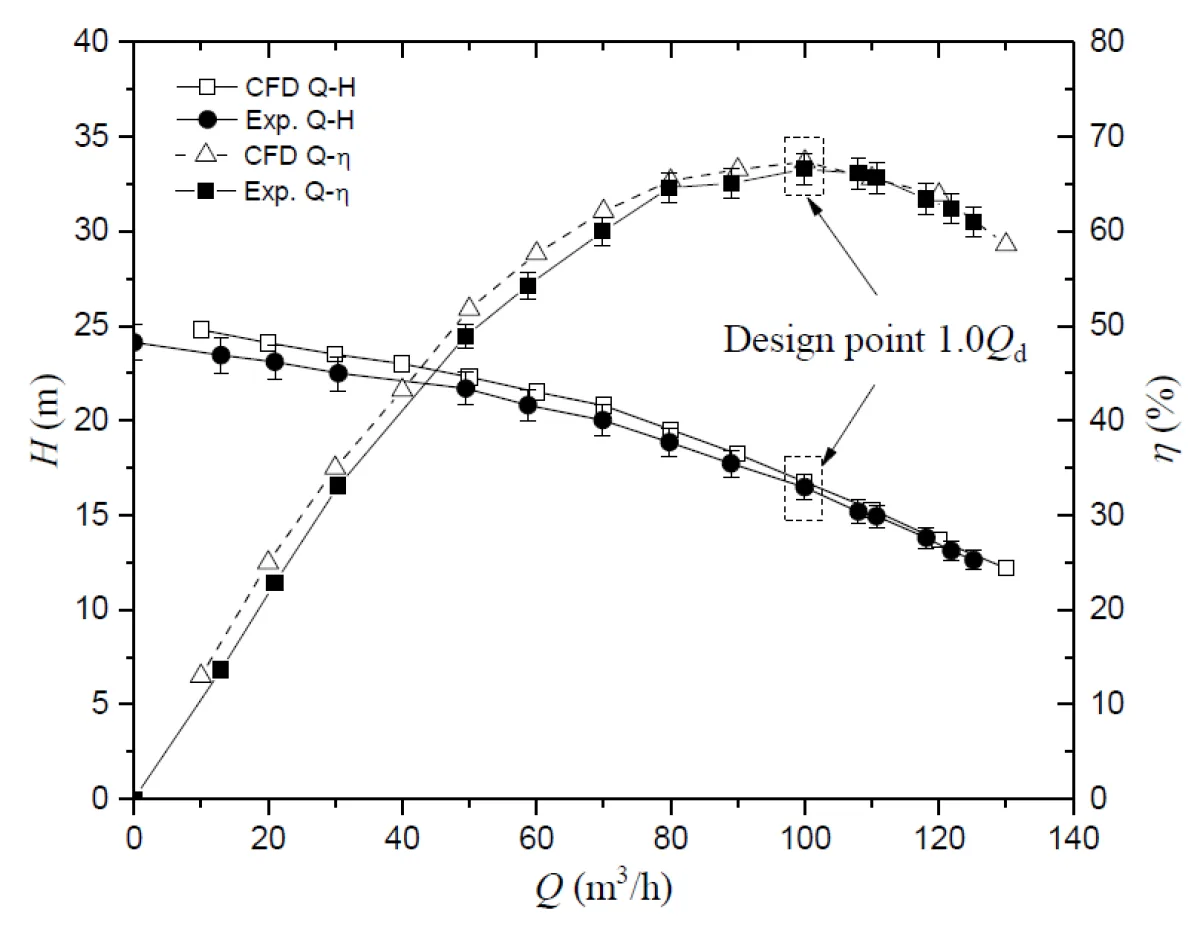
- Excellent agreement with experimental data was achieved, with head and efficiency predictions within 2% at the design operating point.
The structured mesh played a decisive role in capturing both time-domain and frequency-domain flow characteristics with high fidelity.
Conclusion
This study demonstrates that accurate prediction of flow instability, pressure pulsations, and vibration in double-blade centrifugal pumps is highly dependent on mesh quality and topology consistency. The complex unsteady flow physics inherent to such pumps cannot be reliably resolved using low-quality or inconsistent meshes.
By adopting structured, topology-based meshing, the study achieved grid-independent, experimentally validated CFD results across multiple operating conditions. The outcomes highlight GridPro’s effectiveness in supporting advanced turbomachinery CFD workflows, particularly for applications where unsteady flow behavior, vibration, and reliability are critical design concerns.