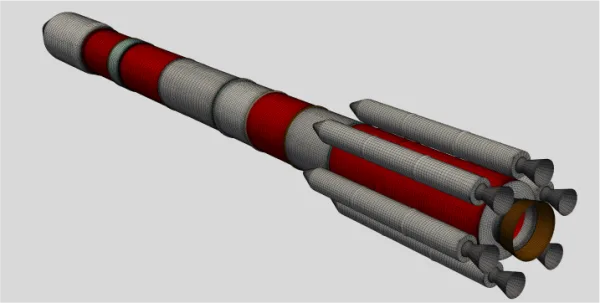
Aerospace
GridPro has been the choice of many leading companies for decades to mesh high speed vehicle configurations. The high-quality structured grids are valuable in hypersonic flow simulations due to its ability to handle complex geometries and provide high-resolution meshes, which are crucial for capturing the sharp gradients, shocks, determine thermal load and perform boundary layer studies.

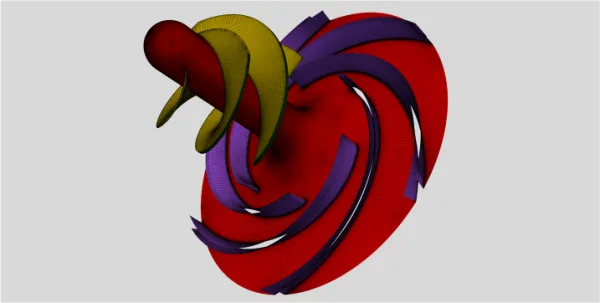
Turbo Machinery
GridPro plays a prominent role in the CFD analysis of turbomachines, particularly for simulating internal flow passages such as those found in gas turbines, compressors, and pumps. Turbomachinery components like axial and radial turbines, compressors, and fans often feature intricate geometries with curved blades and intricate passages.
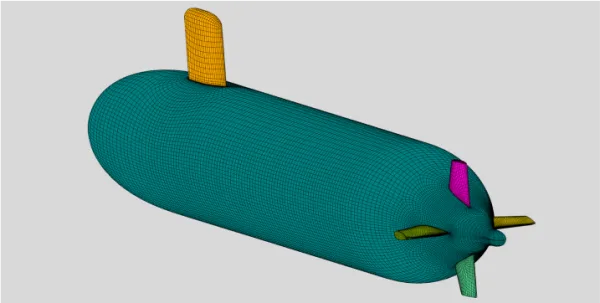
Marine
The maritime industry prioritizes ship design and operational efficiency through fluid dynamics simulations. Key improvements include optimized hull designs and propulsion systems that reduce drag and enhance stability. GridPro facilitates these efforts with a platform that simplifies meshing for hulls and propellers, enabling faster, precise CFD solutions.
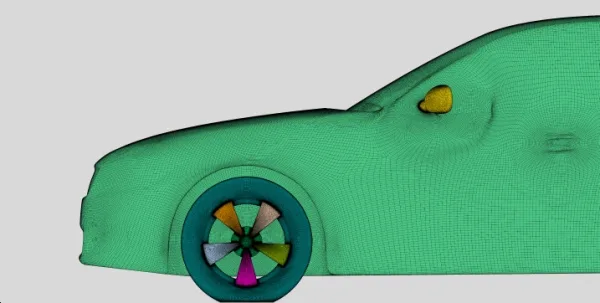
Automotive
GridPro excels in the automotive sector, delivering precise results in fuel injection, heat transfer, external aerodynamics, heat exchanger, and exhaust manifold analysis. Its meshes are optimal for simulations involving rotating equipment, with automated topology creation and high-quality grid generation.
Biomedical
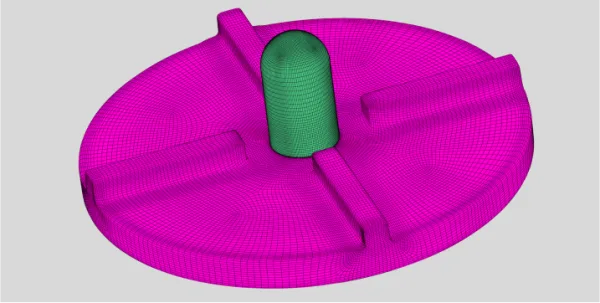
GridPro serves as a foundational element in a wide array of biomedical simulations, from cardiovascular simulations to respiratory studies, orthopedic biomechanics, drug delivery, and beyond.
Chemical
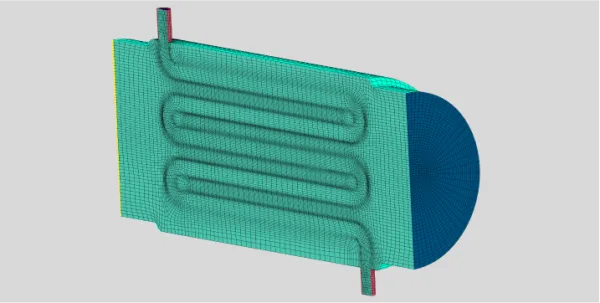
GridPro's multiblock meshing serves as a powerful tool in the fields of chemical and processing industry, enabling the simulation and analysis of fluid flows, as well as heat and mass transfers, in various processes and equipment.
Energy
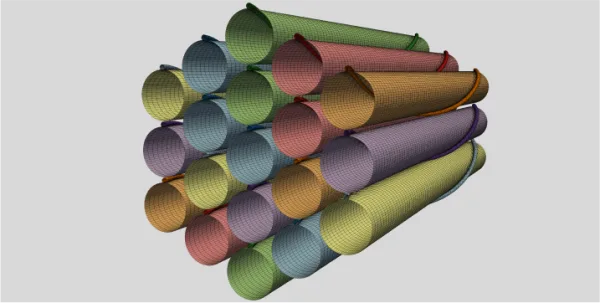
GridPro is extensively used in the energy sector, especially in oil and gas, wind, wave, tidal energy, and nuclear power. It utilizes multiblock hexahedral meshes with CFD solvers to efficiently address complex flow challenges, ensuring optimal solutions for energy projects.